How Simple Food Choices Can Align Human Health and Environmental Sustainability
Can taking care of ourselves and taking care of the planet actually go hand-in-hand?
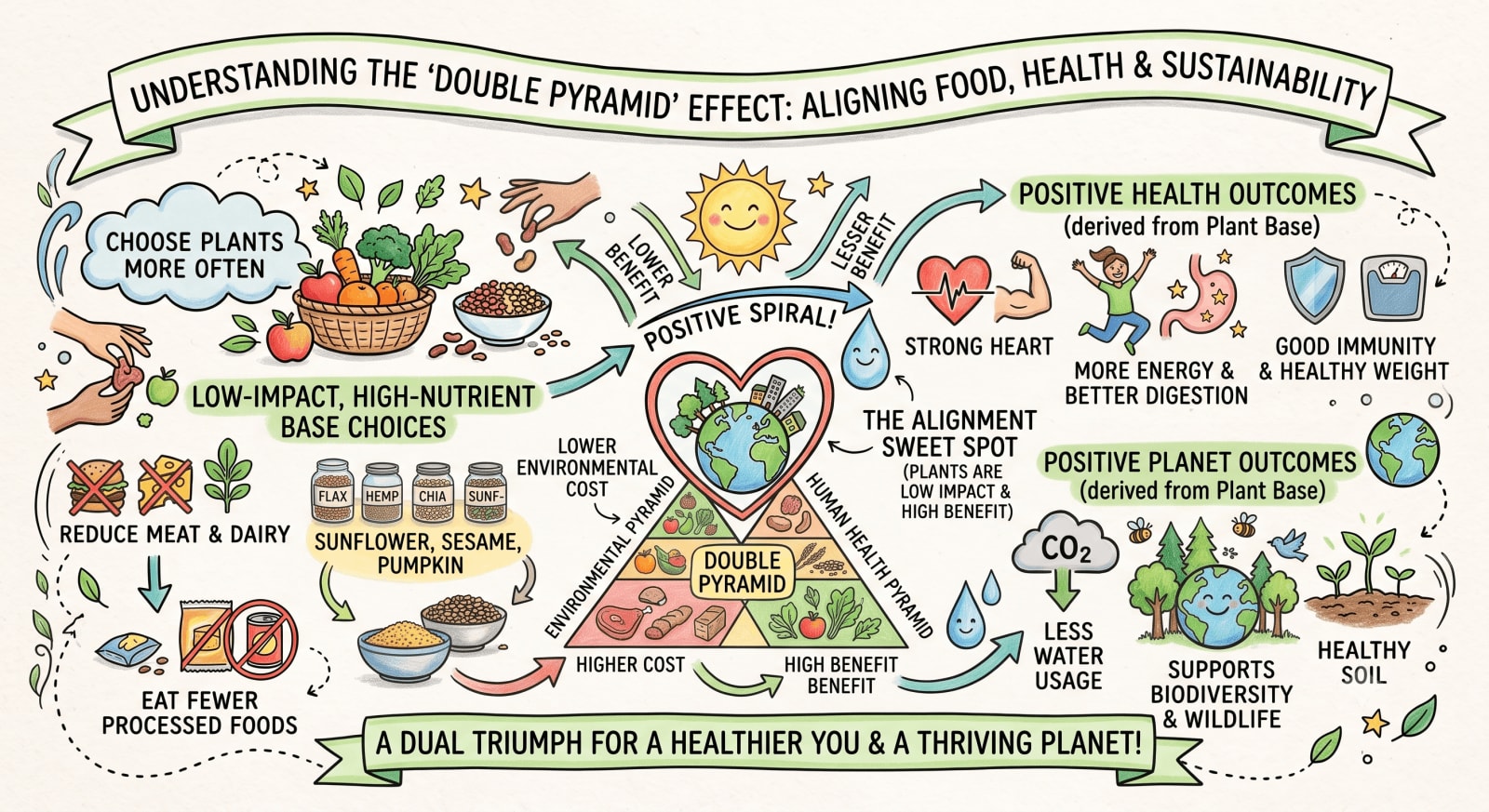
I've been wondering lately about a pretty simple question: Can taking care of ourselves and taking care of the planet actually go hand-in-hand?
This really hits home in our daily lives, especially when we look at what's on our plates. I actually cut out meat over eight years ago, and after trying out a pescatarian diet for a bit, I went back to being fully vegetarian. All that experimenting and learning has totally changed how I see food.
What I've consistently found, through reading, trying things out, and just really listening to my body, is that simple, mindful food choices usually work out best.
- Think steamed veggies instead of those super-processed meals.
- A daily blend of seeds like flax, hemp, sunflower, chia, sesame, and pumpkin.
- Making pulses and millets a regular part of meals, not just an "every-once-in-a-while" healthy option.
It really hits you how just a few basics quietly make such a big difference to your overall health. Enough protein helps with repair, Vitamin C gives your immunity a kick, and iodine keeps your thyroid humming along and helps with energy. These aren't just some passing fads; they're absolutely crucial.
Environmentally speaking, these kinds of foods usually need way fewer resources. That means less pollution, less water, and fewer things needed to grow them, all while giving us the same great nourishment.
-
The 'Double Pyramid' Effect: Studies keep showing that foods easiest on the planet (like veggies, legumes, seeds, and whole grains) are almost always the most nutritious for warding off sickness. People often picture this as the 'Double Pyramid' – linking health and climate.
-
Millets & Pulses vs. Resources: Millets are super tough against drought and need 70% less water than rice. Pulses (think lentils and beans) are 'nitrogen-fixers,' meaning they naturally boost the soil's richness, so you don't need as much synthetic fertilizer – which, by the way, produces a ton of greenhouse gases.
-
Steaming vs. Processing: When it comes to cooking, steaming is actually one of the smartest ways to hold onto those water-soluble vitamins (like C and B vitamins) that often disappear when you boil food or get nuked during heavy processing.
-
Seeds Packed with Nutrients: Seeds like flax, hemp, and chia are just bursting with micronutrients. They give us crucial healthy fats (Omega-3s) and minerals (Magnesium, Zinc) that can sometimes be tricky to get enough of on a plant-based diet. Basically, they're incredibly efficient 'fuel' for the amount of land they take up.
I'm really keen to hear from anyone in nutrition, public health, or sustainability. Where have you seen this kind of balance play out in the real world?
Loading comments...