From Factory Data to Verified EPDs
Since April 2024 I have worked as a Sustainability Analyst for LCA and EPDs at WAP Sustainability, now part of SLR Consulting — turning manufacturers' plant data into verified environmental product declarations across ten product sectors and four world regions, and leading the LCA on a state transportation agency's pavement preservation study.

WAP Sustainability is a US consultancy, since acquired by SLR Consulting, and I work with the team remotely from India. At BEE I had watched projects stall for lack of product-specific data; here I work on the other side of that problem — producing it.
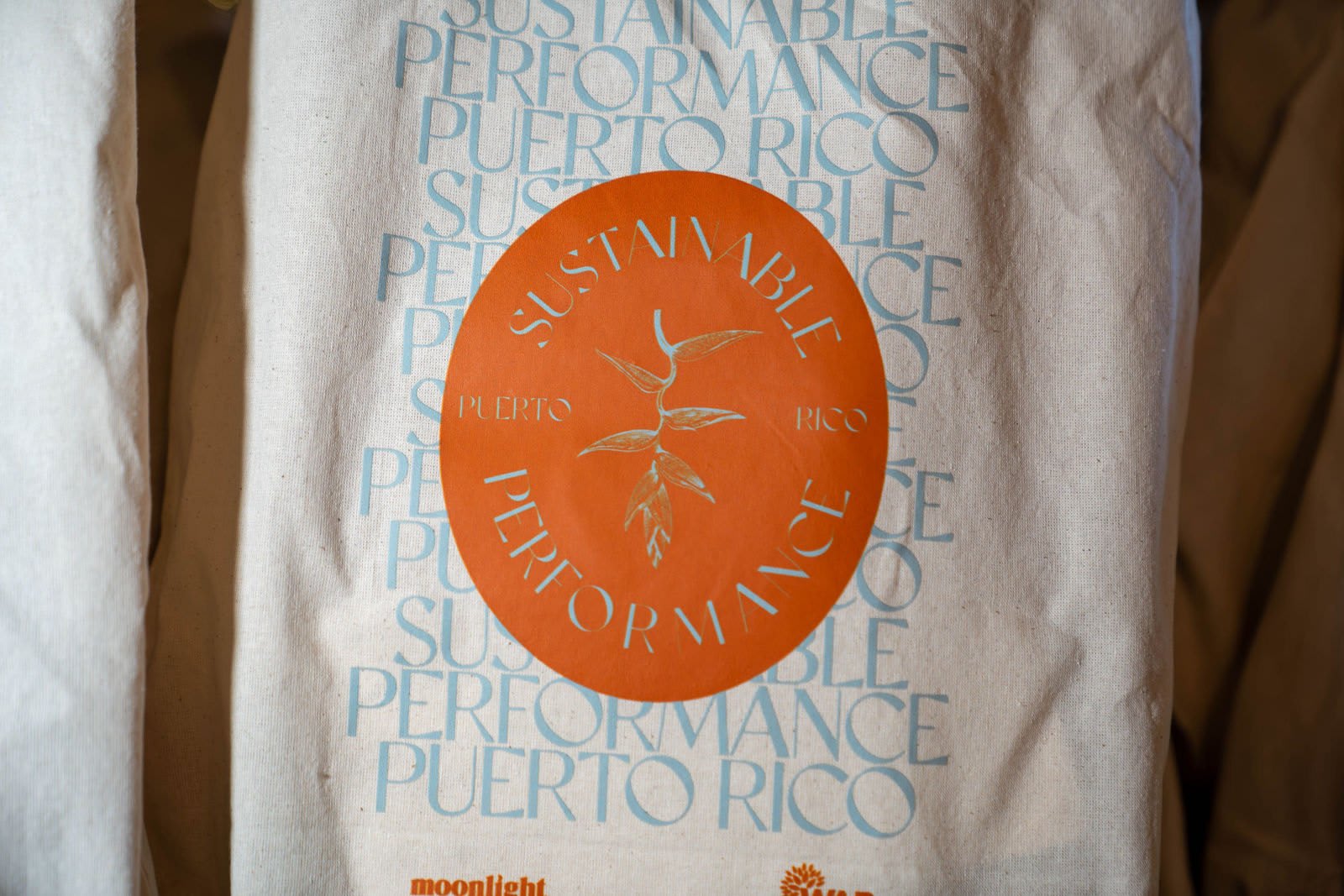
The clients are manufacturers: flooring and textiles, contract furniture, electrical equipment, precast concrete infrastructure, insulated façade panels, tile, wood-alternative decking, cement additives and window shading. What they need is credible, verified environmental data that architects and specifiers can actually use — a theme the whole team gathered around at our January 2025 retreat in Puerto Rico, built on sustainable performance.
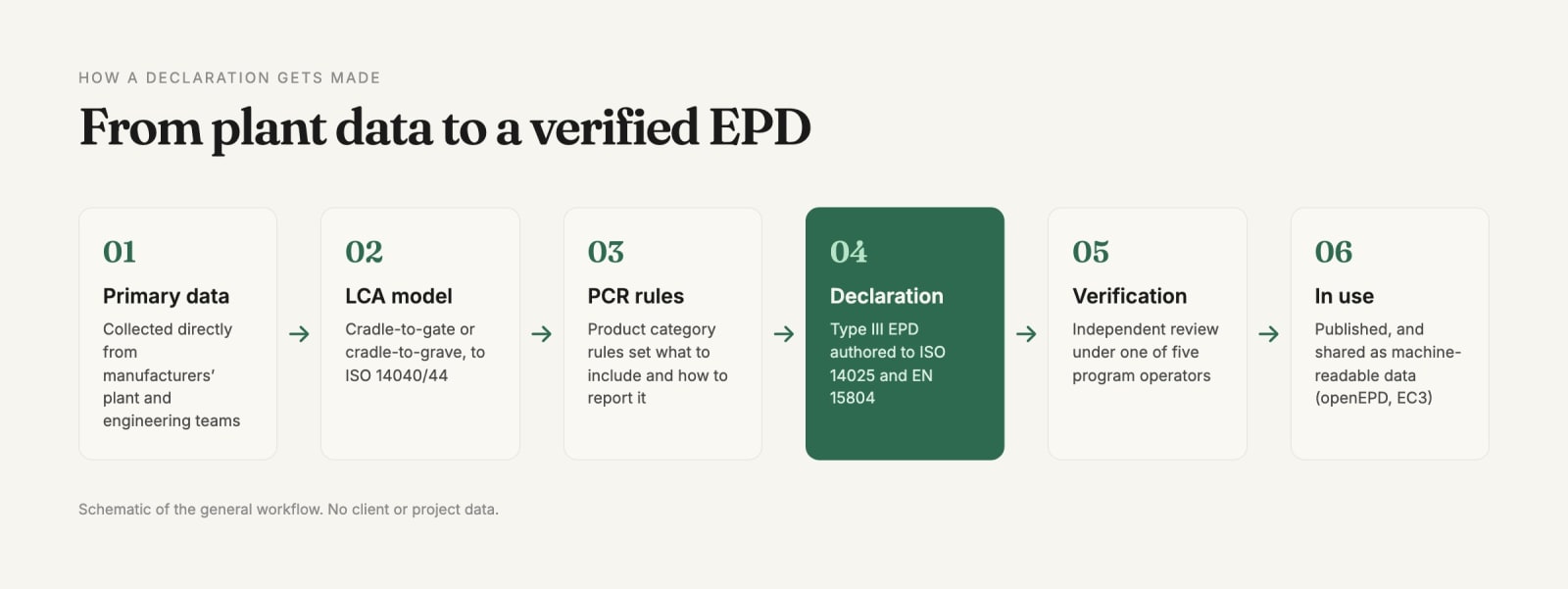
From plant data to verified declarations. I build cradle-to-gate and cradle-to-grave models to ISO 14040/44 from primary data collected directly from manufacturers' plant and engineering teams, then author the Type III declarations to ISO 14025 and EN 15804. Each is verified under one of five program operators, each with its own PCR requirements and verification protocols.
One model, many regions. For product families sold worldwide, I develop multi-region EPDs across North America, China, Australia and EMEA/APAC — reconciling regional grid mixes, supply chains and program operator rules within a single parent model.
Beyond the standard EPD. PEP ecopassport declarations for electrical products modelled in EIME, supplemental LCAs, EC3 database management, and machine-readable declaration data in openEPD — including contributing to the development of the EPD World portal. Outside product LCA, I have supported corporate GHG inventory and SBTi target-setting, an embodied-carbon and healthy-materials policy pilot, and a comparative LCA of precast concrete infrastructure products.
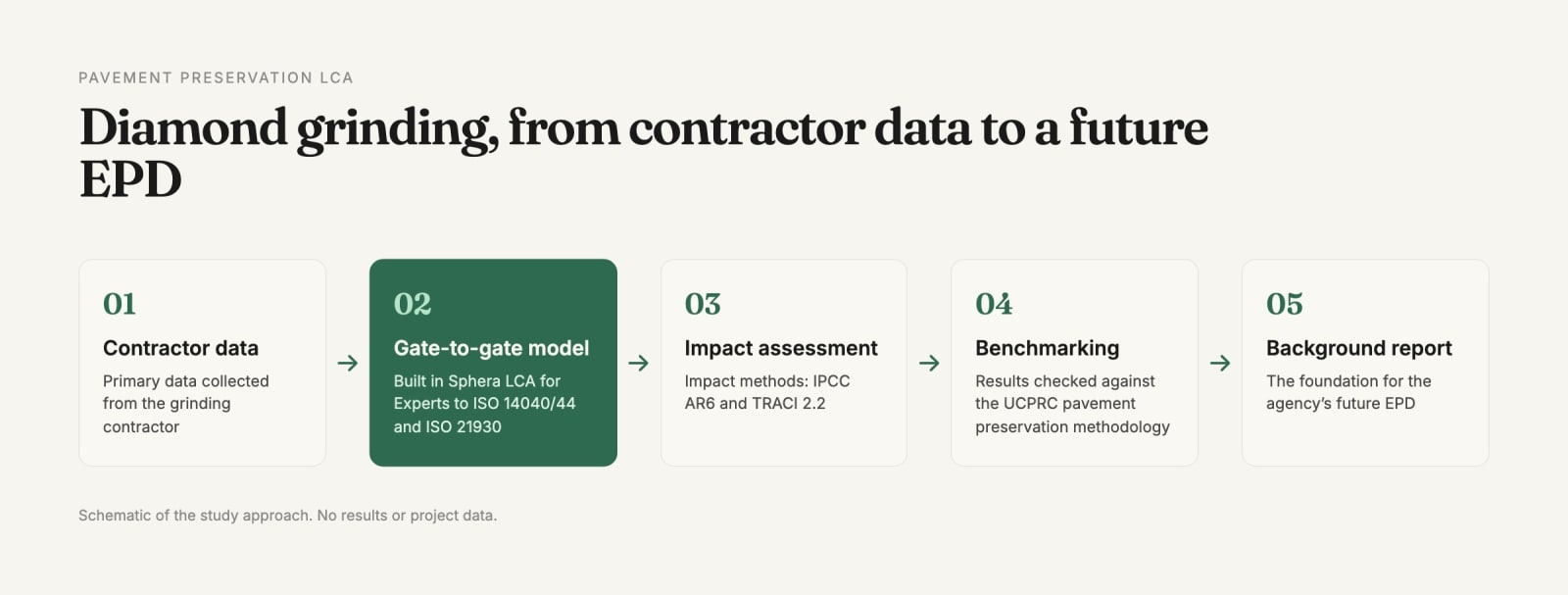
Leading a pavement LCA. For a state transportation agency, I was lead LCA practitioner on a study of diamond grinding, a pavement preservation treatment. I built a gate-to-gate model in Sphera LCA for Experts to ISO 14040/44 and ISO 21930, using primary data collected from the grinding contractor and the IPCC AR6 and TRACI 2.2 impact methods, benchmarked it against the UCPRC pavement preservation methodology, and authored the background report that will underpin the agency's future EPD.





More than 40 LCA and EPD engagements for over 20 manufacturers, and author or co-author of the reports behind more than 50 published product declarations. Client names and results stay with the clients.
What has changed most is scale. At BEE I was chasing product data one store at a time; now I build the models, data and declarations that make that data exist in the first place — the systems side of environmental transparency, and the side I want to keep building.